We use cookies on this site to enhance your user experience
By clicking the Accept button, you agree to us doing so. More info on our cookie policy
We use cookies on this site to enhance your user experience
By clicking the Accept button, you agree to us doing so. More info on our cookie policy
Published: Mar 29, 2026
Authors:
Saurabh Parkar
,
Xiaochan (Luna) Xue
O-RAN/AI-RAN Series
This post is part of a series all about O-RAN/AI-RAN.
Fundamental
Advanced
The JESSE 2026 Robot Car project explores a wireless teleoperation system that combines a gaming steering wheel with AI-RAN-assisted communication control for remote robot driving. The goal is to create a responsive and reliable human-in-the-loop driving experience in which an operator can control a robot car intuitively, while the network dynamically adapts to maintain low latency and stable control delivery.
This project connects robotics, wireless networking, and interactive control systems. On the user side, a game wheel provides intuitive steering and pedal-based acceleration and braking. On the network side, AI-RAN is used to monitor communication quality and support intelligent adaptation so that teleoperation remains smooth even under changing wireless conditions.
Remote robot driving requires more than simple connectivity. To safely operate a robot car in real time, the system must support:
Traditional wireless links often treat robotics traffic like ordinary data, but teleoperation is highly sensitive to delay, jitter, and packet loss. Even a brief disruption can affect steering responsiveness and overall driving stability. This project investigates how AI-RAN can help prioritize and stabilize these control loops in a realistic robot driving scenario.
The project consists of three tightly coupled components:
The human operator uses a gaming steering wheel and pedal set as the primary driving interface, enabling intuitive control of steering, throttle, and braking.
This design provides a more natural interaction than keyboard-based or basic joystick control and better reflects how remote driving may be supported in future intelligent robotic systems.
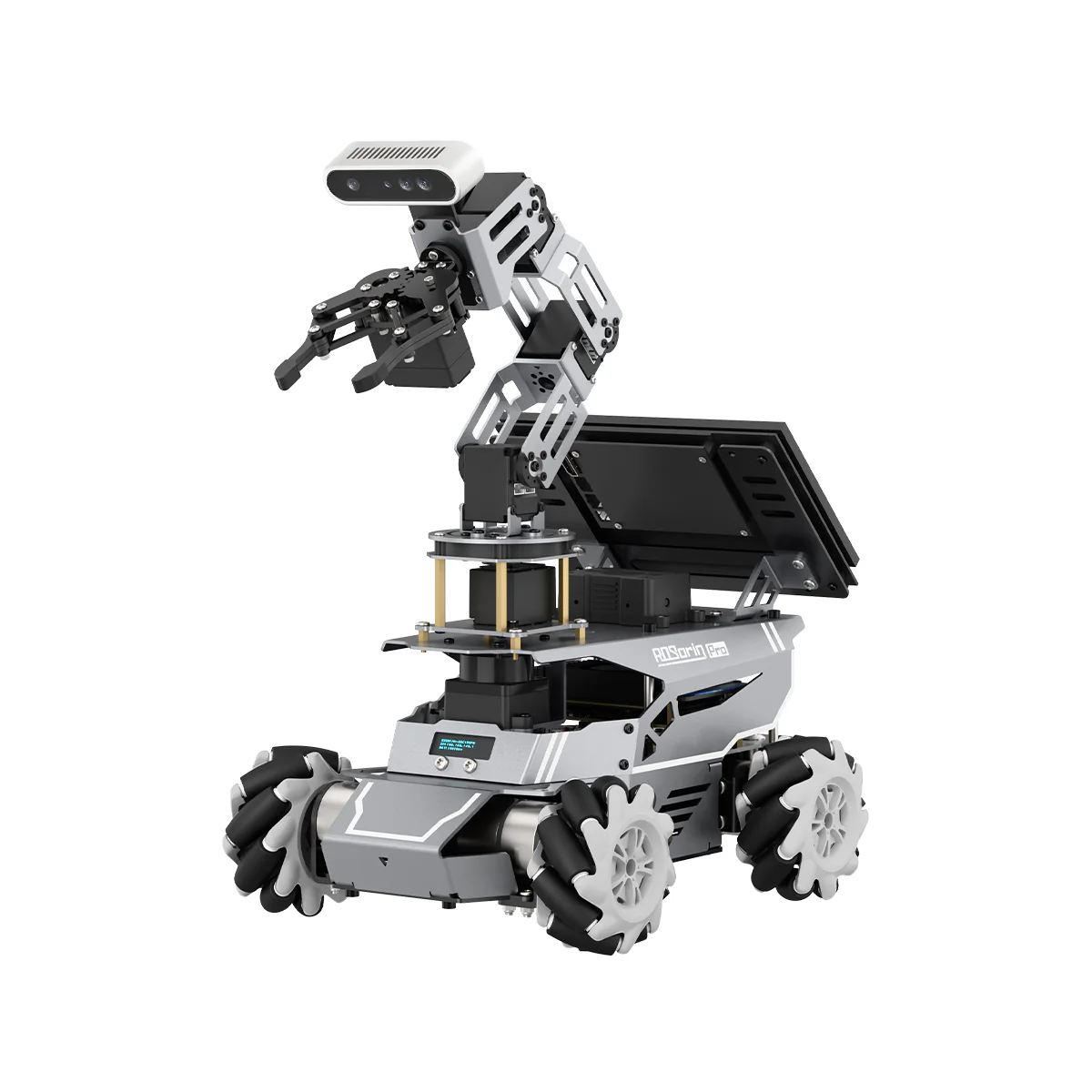
The robot car acts as a mobile edge device equipped with onboard sensing, wireless connectivity, and actuation. It receives driving commands from the remote operator and transmits real-time telemetry back to the control station.
The platform enables evaluation of:
A key research component is the use of AI-RAN to help maintain communication quality during teleoperation. The network monitors performance indicators such as latency, throughput, packet loss, and link quality, then uses intelligent adaptation strategies to improve service continuity for the robot car.
Possible AI-RAN functions include:
Rather than treating the network as a passive transport channel, this project studies how the RAN can become an active participant in supporting robotic control.
The JESSE 2026 Robot Car project aims to answer the following questions:
This project is expected to deliver:
More broadly, the project serves as a step toward next-generation networked robotic systems, in which communication and control are jointly designed rather than treated as separate components.
This effort contributes to emerging applications in:
By combining intuitive driving control with communication-aware network intelligence, JESSE 2026 Robot Car provides a practical example of how AI-native RAN systems can support future robotic mobility platforms.
The current phase focuses on system integration and proof-of-concept development, including:
Future phases may include onboard video streaming, autonomous assistance, and more advanced RAN-side adaptation for safety-critical robotic tasks.

A tracked mobile robot platform with onboard sensing, actuation, and wireless connectivity for teleoperation experiments and end-to-end control latency evaluation.
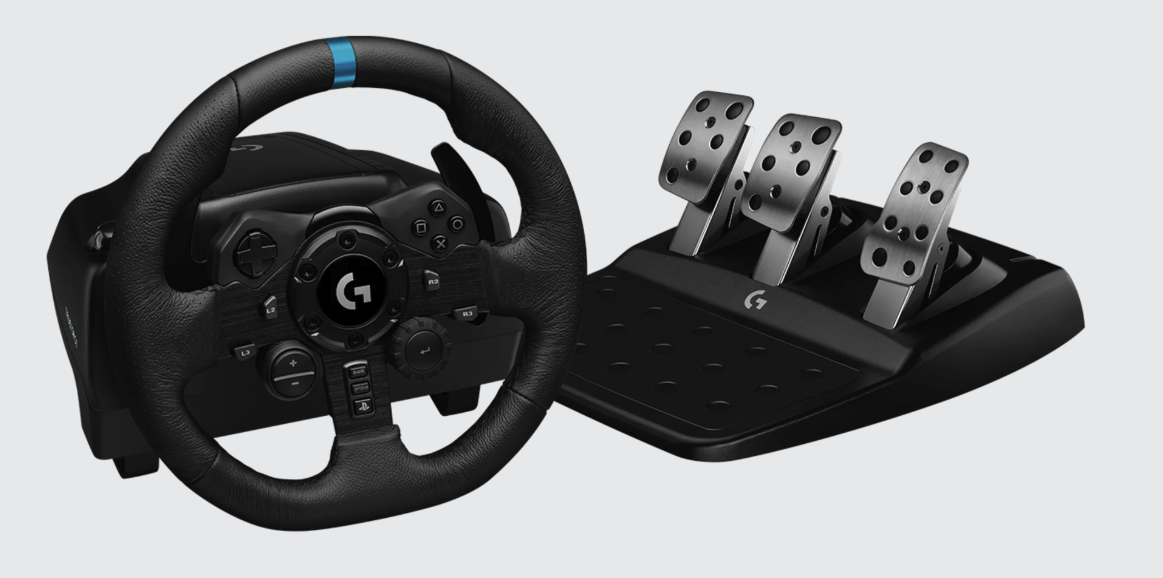
Human-in-the-loop driving interface providing intuitive steering, throttle, and braking for remote robot control experiments.

O-RAN–style programmable RAN stack for monitoring link quality and experimenting with communication-aware adaptation during robot teleoperation.
Share
Latest Posts